
Oven Cleaning Business Guide
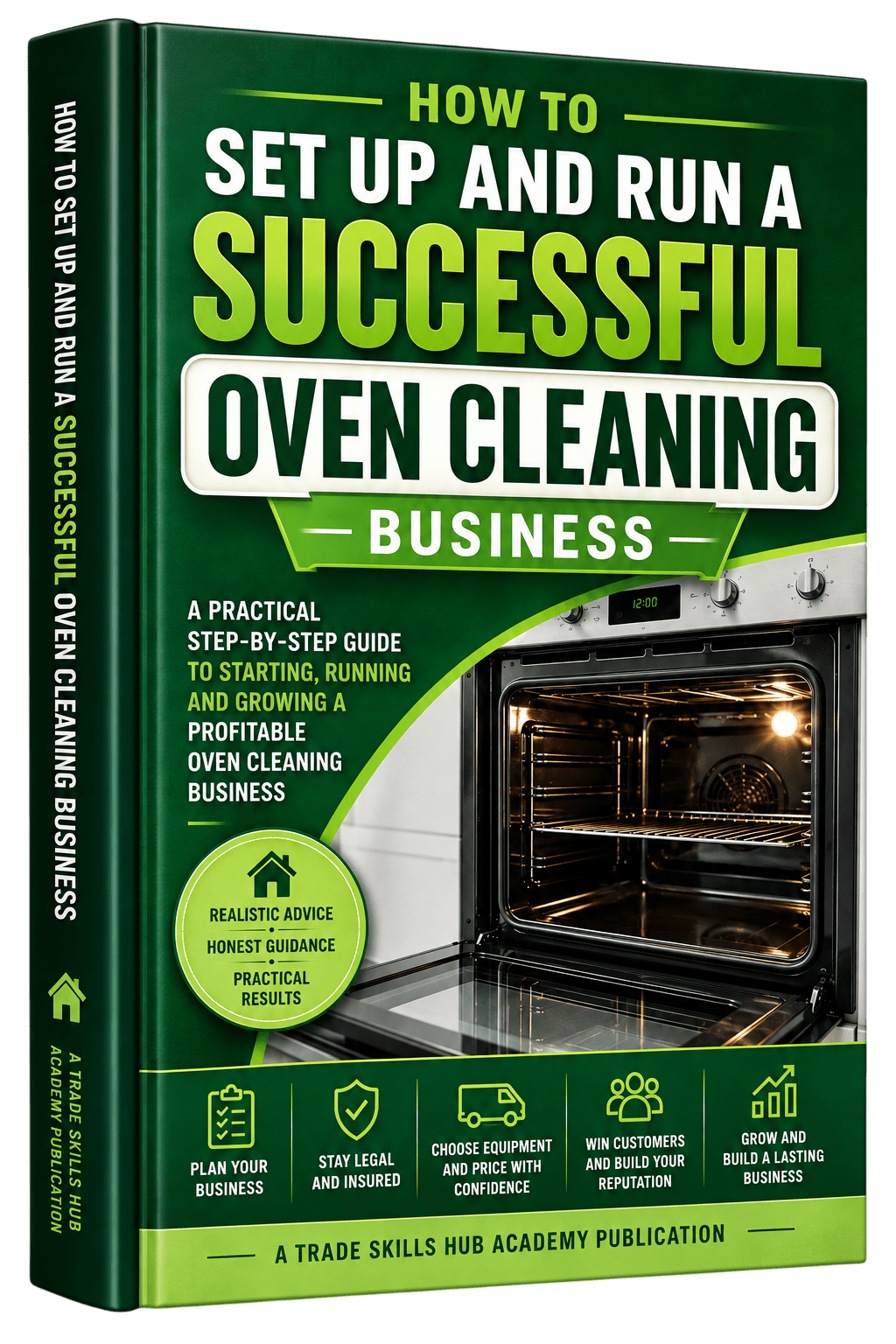
How to Set Up and Run a Successful Oven Cleaning Business
The complete, plain-English guide to starting an oven cleaning business — from your first day of training to a fully booked round.
Written around the UK scenario, but the principles apply in most English-speaking nations.
Ask a room full of people to name the household chore they put off the longest and the oven wins almost every time. That everyday reluctance is the foundation of an entire trade — and the reason a well-run oven cleaning business can build a loyal, repeating customer base faster than almost any other domestic service.
This book is written for anyone seriously considering starting an oven cleaning business: as a full career change, as a part-time addition to existing work, or as a first step towards working for yourself. It assumes no prior experience of the trade and no background in running a business.
What it does assume is a willingness to do the work properly — to train thoroughly before charging anyone, to treat customers and their homes with real care, and to build the kind of reputation that, in this trade more than most, is worth far more than being the cheapest quote in town.
Why oven cleaning is one of the easiest trades to start
Compared with almost every other trade covered in this series, the barriers are low:
- Low start-up cost. The equipment fits in a modest van. No workshop, no yard, no heavy plant.
- Fast to learn. Training is measured in days, not years. There is no apprenticeship and no mandatory qualification.
- Demand everywhere. Every town, every type of household, every income bracket.
- Start part-time. Many operators build the round alongside existing work before going full-time.
- Genuine repeat business. Most households want an annual or six-monthly clean, so today’s job is next year’s booking.
What you get inside
26 chapters, four appendices and a full back-matter section, following the natural order of actually building the business.
Part One — Is this trade for you?
Chapters 1–5 cover the oven cleaning market and who really buys the service, what the work involves day to day, the skills, temperament and fitness it demands, how to train and practise properly before your first paid job, and an honest comparison of the franchise route against going independent.
Part Two — Setting up properly
Chapters 6–11 cover business structure and registration, insurance and legal requirements, health, safety and chemical handling, equipment and van set-up, cleaning products and methods, and how to price your services so the business is still standing in five years.
Part Three — Winning customers
Chapters 12–18 cover branding and first impressions, your website and local search, Google Business Profile and reviews, social media and the selling power of before-and-after photographs, leaflets, local advertising and partnerships, repeat business and word of mouth, and how to handle bookings, quotes and customer communication.
Part Four — Doing the work
Chapters 19–22 cover a full step-by-step clean of a standard oven, then ranges, Agas, hobs, extractors and the extras that lift your average job value — followed by the problems, damage and difficult situations every operator eventually meets, and the customer care that sets you apart from the competition.
Part Five — Running and growing the business
Chapters 23–26 cover money, bookkeeping and tax, scheduling, routes and working efficiently, growing beyond one van, and staying well through the seasonal peaks and lulls of a physically demanding, largely solitary trade.
Appendices
Appendix A — Start-up checklist
Appendix B — Job-day kit checklist
Appendix C — Pre-clean condition and customer record sheet
Appendix D — Useful organisations and further reading
Who this book is for
- Anyone researching how to start an oven cleaning business from scratch
- Cleaners, valeters and other domestic-service operators adding oven cleaning as a second income stream
- People weighing up an oven cleaning franchise against going independent
- Newly self-employed operators who can already clean an oven but are struggling with pricing, marketing or paperwork
- Anyone who wants an honest picture of the trade before spending money on equipment
What makes this guide different
No brand names, no invented prices. Suppliers, products and prices change constantly and vary by region. This book gives you the underlying principles and judgement instead, so it stays useful.
No get-rich-quick promises. You will find realistic expectations about earnings, physical demands and the time it takes to fill a round.
Written to be used, not admired. Plain English, no jargon, and checklists you can work through the week you start.
Regulatory detail caveated. Every legal, tax and insurance reference is stated as correct at the time of writing, with a reminder to confirm the current position with the relevant official body before acting.
Frequently asked questions
Your main outlays are a suitable vehicle, a heated dip tank, cleaning solutions, hand tools, protective equipment, floor and worktop protection, insurance and basic branding. It is one of the cheapest trades to enter properly — the book walks you through costing your own list from current suppliers rather than relying on figures that date.
There is no mandatory qualification in the UK. You do need proper training in safe chemical handling and appliance dismantling, adequate insurance, and an understanding of your COSHH and waste disposal responsibilities. The book covers all four.
It depends on your capital, your confidence at marketing and how much you value autonomy. Chapter 5 sets the two routes side by side honestly, including the ongoing fees and operating restrictions franchises typically carry.
It can be, and it benefits from strong repeat custom — but profitability depends almost entirely on pricing and scheduling rather than on how many jobs you do. Chapters 11 and 24 cover both.
Yes, and many do. The book covers building a round alongside existing work, and the point at which going full-time makes sense.
The legal, tax and regulatory sections are written around the UK. The trade knowledge, pricing approach, marketing and job-by-job method apply in most English-speaking countries.
Start the trade properly
Everything you need to go from considering oven cleaning to running a full, profitable round — the market, the training, the kit, the pricing, the marketing, the job itself and the long haul.
Part of the Trade Skills Hub Academy series of practical guides for tradespeople — including window cleaning, pressure washing, carpet and upholstery cleaning, gardening book, gutter cleaning, car valeting, property maintenance, marketing and trade franchises.