
BLOG
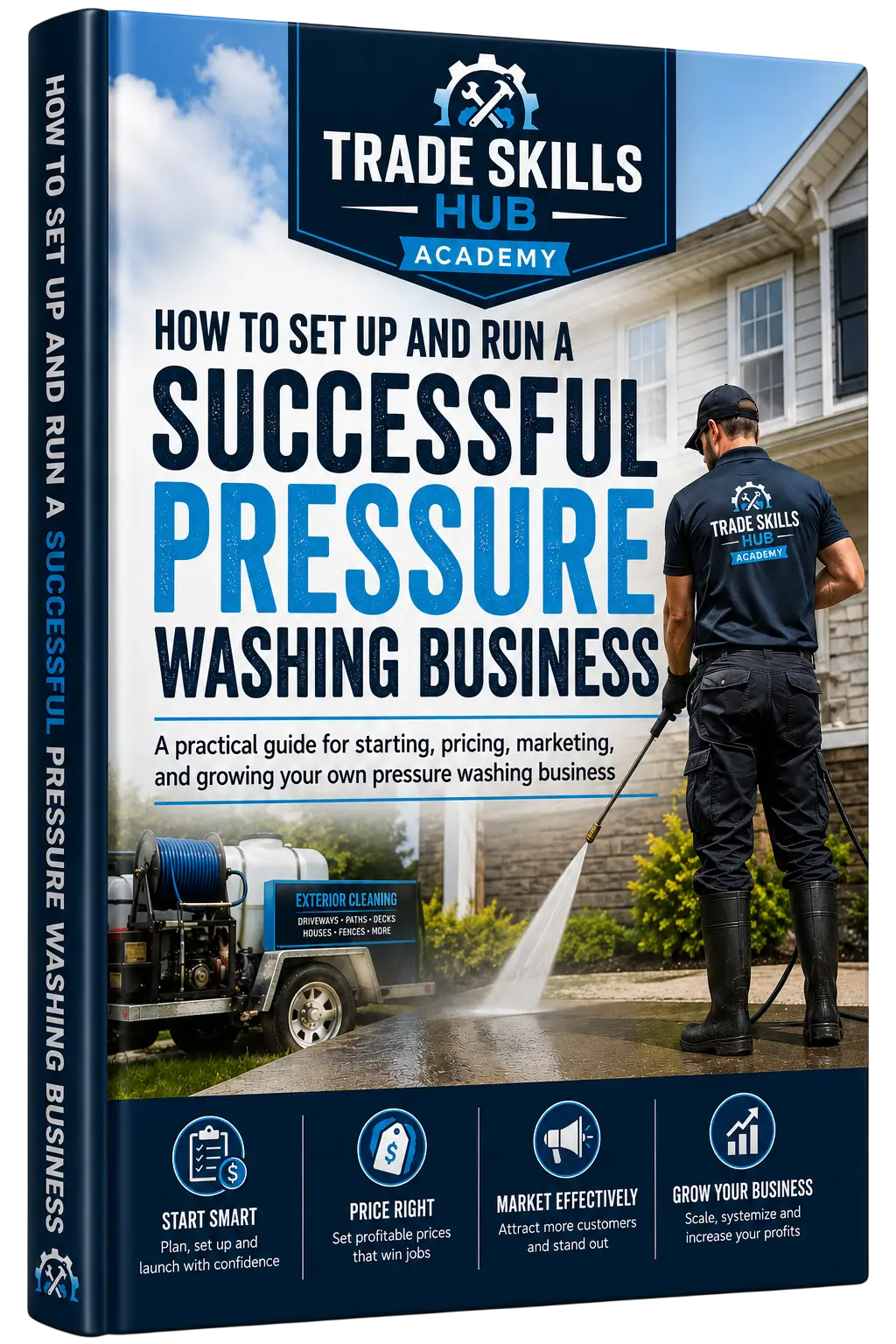
How to Start a Pressure Washing Business:
A Practical Guide to Building a Profitable Business
Introduction
Starting a pressure washing business can be an excellent route into self-employment. From domestic driveways and patios to commercial and agricultural cleaning, there is strong demand for professional exterior cleaning services.
This guide explains how to build a profitable and sustainable business.
If you’re exploring different trade businesses, our guide to starting a trade can help you compare profitable opportunities before choosing one.
Why Pressure Washing Is a Strong Business Opportunity
Pressure washing offers relatively low start-up costs and the potential to grow into a highly profitable operation.
Benefits include:
- Low barriers to entry.
- Visible results that generate referrals.
- Opportunities for repeat business.
- Domestic, commercial and agricultural markets.
- Scope to expand into specialist services.
Is This the Right Business for You?
Running a successful pressure washing business requires far more than owning a machine. The most successful operators are:
- Reliable and punctual.
- Physically fit.
- Safety conscious.
- Good communicators.
- Self-motivated.
- Comfortable working independently.
Understanding the Market
Many new businesses begin by cleaning patios and driveways, but the market is far broader than most people realise.
Potential customers include:
- Homeowners.
- Landlords.
- Letting agents.
- Shops and offices.
- Farms and agricultural businesses.
- Warehouses and factories.
Many businesses later expand into building upkeep services to provide customers with a broader range of exterior maintenance solutions.
Choosing Your Services
Most businesses start with a small range of services and expand over time.
Typical services include:
- Driveway and patio cleaning.
- Render and cladding cleaning.
- Roof cleaning.
- Soft washing.
- Graffiti removal.
- Agricultural and industrial cleaning.
Offering roof drainage services alongside pressure washing can increase repeat work and improve customer retention.
Tools and Equipment
Investing in the right equipment from the beginning can improve productivity and the quality of your work.
Essential equipment includes:
- A professional pressure washer.
- Hoses, reels and lances.
- Surface cleaners.
- Water tanks.
- PPE and safety equipment.
- A reliable van or trailer.
Working Safely and Legally
Pressure washing involves water, chemicals and powerful equipment. Safety must always come first.
Key considerations include:
- Public liability insurance.
- Risk assessments.
- COSHH compliance.
- Safe chemical handling.
- Electrical safety.
- Protecting customers and property.
Understanding COSHH regulations helps ensure chemicals are handled safely and responsibly during cleaning work.
Pricing Your Work Properly
One of the biggest mistakes new operators make is charging too little. Your prices must cover:
- Labour.
- Fuel and transport.
- Equipment costs.
- Insurance.
- Chemicals.
- Marketing and administration.
Some businesses charge by the hour, while others provide fixed-price quotations.
Finding Customers
A steady flow of enquiries is essential for long-term success.
Popular marketing methods include:
- Word-of-mouth referrals.
- Facebook and Instagram.
- Google Business Profile.
- Before-and-after photographs.
- Leaflet campaigns.
- Commercial networking.
Growing Your Business
Many pressure washing businesses begin as one-person operations before expanding into commercial contracts or specialist services. Some owners remain sole traders, while others build larger companies with multiple vehicles and staff.
Building a Business That Lasts
A successful pressure washing business is built on reliability, professionalism and high-quality work. Customers value contractors who communicate clearly, arrive on time and consistently deliver excellent results.
Whether you want a part-time income or a full-time business, pressure washing offers genuine opportunities for those willing to put in the effort.
Before expanding, it’s worth comparing different business ownership options to decide which growth path suits your long term goals.